
Adrian Taverner works in the movies, but it wasn’t always so.
Adrian graduated high school with honours in 1989, majoring in visual arts and among the highest scoring students in English in BC. He fled Prince George as soon as the car was packed, heading to the University of Victoria. He hadn’t quite figured out what he wanted to do there, but it wasn’t Prince George, and that was a pretty good start.
School interested him but couldn’t hold his attention. Too slow. Too much somebody else’s game. It wasn’t long before his love of music (and his prodigious collection) saw him DJing parties, and this was before being a dj was cool.
He bartended for one fateful summer at one of Victoria’s more tourist-gouging restaurants, and this is where he met Lee Baran, bartender and fellow night life connoisseur. Turned out Adrian was better behind the decks than the wood though, and he abandoned bartending to work residencies in all the best clubs in town for most of the next decade. But when the crown jewel of them all was torched less than two weeks after opening in a blaze of soap-opera drama, he left Victoria in disgust.
Scouring Vancouver for the right dj gig, Adrian bumped into Lee outside Vinnie’s, a pasta joint on Granville. After an enthusiastic reunion, Lee pressured management into making a change in the entertainment and Adrian was suddenly spinning weekends there. Has there ever been another pasta restaurant that could boast line-ups and girls dancing on the bar? Maybe not before the dream team took over at Vinnie’s, and maybe not ever again, but it was legendary while it lasted.
While in Vancouver, Adrian dove into his other passion: photography. He borrowed a friend’s Nikon F-65 and was soon spending $50 a week on film and processing. Turns out he’s pretty good at that, too.
Adrian returned to Victoria in 2001 when the owner of that torched club tracked him down and made a very sweet offer to come back. That new club was a huge success. That new club was also torched. Adrian retired as a DJ.
His part-time gig at web company Wondermill became a full-time gig, where he brokered ad space on the interwebs. Wondermill: a very friendly team with a very progressive human resources mind-set. Evidence shows that if you love your staff they will love you back, and it pays off in loyalty — give them a day off when they need it, and they will take fewer days off. Wondermill flourished even as the internet bubble burst. It was here that Adrian began blogging as djmischiff.
Adrian had maintained his avid interest in photography, buying his own F-65 and then his first digital camera, the famous Canon G3. His interest went from expensive to prolific, shooting about a thousand frames a month. He toyed with the idea of committing to a career in photography, but as always he struggled with too many interests and not enough clones. In late 2005, Adrian was inevitably drawn back to Vancouver to work as assistant sound editor for Miguel Nunes. He took with him the mighty Canon 20D, 8.2 megapixels of brilliant state-of-the-art photographic ninjutsu.
While Adrian proved more than up to the tasks assigned, he found that those who had pursued actual professional training with Pro Tools did have certain advantages, like employability beyond the immediate circle of friendship. Time to find another gig. How about production assistant? The locations department, indeed. Working on set in the thriving Vancouver film scene? Hells yes. Sounds good.
His advice to anyone interested in a career in film production– jump right in after high school. Do not wait. If you wait you will be too old and too smart. If someone offers you $185 a day to lug tents around, watch parked cars, and keep people quiet on set, you might find the idea immediately appealing when compared to your $70 a day at Pizza Hut. Consider, however, that when your eight hour shift at the Hut is done, a locations dude still has at least four more hours in his work day. And if that day is in Aldergrove you have to add the hour commute home before crawling gratefully into bed, and doing it all again five hours later.
Working in the locations department is, in fact, the easiest way to get on set. But you are first in and last out, and as far as anyone else is concerned, you are just a lowly PA. In Canada you are the only other department covered by the Directors’ Guild, but the only way you’re going to make that count for something is through sheer force of personality. Progress is slow if you leave it to the system.
Adrian learned a ton in four months with various productions. He jumped from locations to grip to special effects (through sheer force of personality).
Meanwhile, Lee was also pursuing an interest in film. He worked as a voice actor and began to dabble with Final Cut Pro. After some award-winning success he entered a partnership with Chris Baran, the Artistic Director for Education at Redken. Chris wanted to take his stylists education program to the world, and they created the Fuel Education System. Lee tapped Adrian to record location sound for the first volume, and by the time they shot the second, Adrian had joined the team full time. They moved their production company to New York to meet the demands of global brands like Redken, Pureology, and L’Oreal Professionnel. Here was a job that demanded all sorts of hats. Perfect.
Timing is everything. They were diving deep into media production just as the technology was literally coming home. For the first time, you could shoot in high definition and post everything in a home studio. Production costs fell through the floor, and these fellas were there with mastery of the new technology. Right place, right time. Right nerds.
The number of titles on his business card in 2008 approached the ridiculous: stills photographer, sound editor, location sound recordist, picture editor, photo editor, music producer, camera operator, assistant director, assistant producer, gaffer, grip, locations manager, scout, copy editor, managing editor, graphic designer, and even special effects assistant. Since then he’s added steadicam op, sound designer, audio post supervisor, web creative, and UX designer. They don’t make business cards that big, so he goes with “creative.”
For twelve years Adrian lived full time in New York City working for Chris Baran’s Fuel Productions and Cut Action Media. He is also one third of Chaos Complex Entertainment, along with Lee and Matt Kennedy, whom Adrian befriended back in the Locations days. Lee and Adrian started a New York-centric collaboration called Chesterfield Entertainment. They co-founded Titan Drone Racing. They are exploring VR app development. The whole game is changing, and Adrian is firmly plugged in.
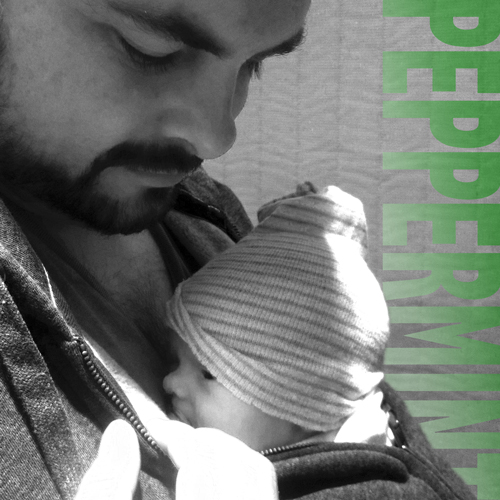
Adrian started a family with Marjorie and little Avery was born in New York in 2012. Suddenly, everything Adrian had always been about now had a center. A reason. Family guy Adrian has bedrock beneath him and, for his girls, the sky’s the limit.
In 2020, of course, COVID-19 flipped the table on the whole world. New York was in rough shape. Avery said they should move to Vancouver, so they did. The work with Fuel and Cut Action Media continues bigger than ever with live online event production. Adrian continues to write prolifically. He’s working hard on building that future.